I was surprised to wake up this morning to a winter wonderland. The first
snowfall is always beautiful, but for many of us it means it’s time to dust off that
darn shovel. I watched people shovel while I was walking today and noticed that
many people were using their backs to do the lifting. Shoveling snow is a
common cause of back injuries during the winter months. These types of injuries
may be prevented or minimized if you use proper lifting techniques for snow
removal. The first thing that we need to remember is that our spine is strongest
in a neutral position. When we lean forward to shovel, it is important to maintain
a nice straight spine, while bending forward at the hips. Whenever possible, it’s
best to slide snow across the laneway to avoid heavy lifting. Unfortunately,
sometimes there are mountains of snow on both sides of the driveway making it
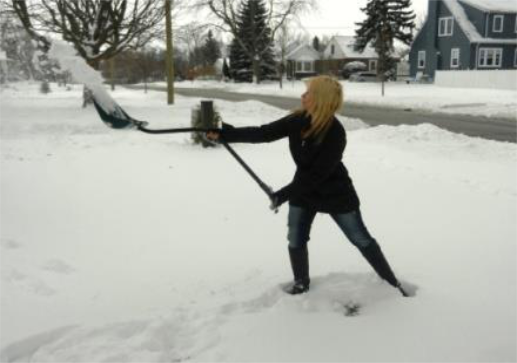
impossible to avoid lifting and tossing it. If you need to lift, be sure you have a
wide base of support with your feet and grip the shovel with one hand as close to
the blade as comfortable. When lifting and tossing snow, remember that the
further the weight is away from your body, the more stress you will place on your
back and shoulders. So, try to keep the load as close to your body as possible.
When purchasing a shovel, small, light, plastic blades are best. The goal is to
keep the load on the shovel under ten pounds. You may want to invest in a shovel
with a curved ergonomically correct handle which will minimize bending.
The consistency of the snow makes a difference as well. Light fluffy snow is only
about three pounds per square foot but slushy wet snow can be up to thirty
pounds per square foot. We must be cautious to avoid getting hurt.
Therefore, to recap, start with the feet wide and planted, using the hips to lean
forward keeping the spine straight and neutral. Now this is important: we should
not be using our back to lift the snow. Have you ever heard the saying, “Put your
back into it?” That is the exact opposite of what we want to do. Most people I’ve
met with back problems have extremely strong backs that have worn down from
years of improper lifting. Let the legs do the work to initiate the lifting motion.
Legs are very strong and are a better choice than your back or arms to lift the
snow. Next engage your core. This means imagine someone was going to push
you. If you are preparing for a shove or a push you will automatically engage our
core. Engaging the core helps protect the back. Keep your chest wide as you
push or lift the shovel. Try to keep your elbows soft. When possible avoid
twisting. Twisting is the most difficult position for the spine. When we twist, we
compress the spine which increases the probability of injury. To minimize
twisting, have your front foot facing the direction you will be tossing the snow.
Weight transfer is also important. When the shovel is closest to your back leg,
have more energy in that back foot and as you move the shovel forward towards
your front leg transfer the energy to the front foot. If you do have to lift and toss
the snow, ideally, you want to avoid tossing it more than three feet. Further
thrusts increase the probability of getting hurt. It’s best to carry snow to a
location where you can deposit it without tossing it, if possible. When shoveling
steps, stand lower than the step you are shovelling. Whenever possible shovel as
soon as you can after the snow plough has passed. This helps avoid dealing with
that really compact icy snow often associated with plowing.
In Ontario alone, there is an estimated 20,000 people per year that visit
emergency rooms due to a slip on the ice. November is falls prevention month.
This is a good time to remind you that wearing proper footwear is important in
slippery conditions. Be certain boots fit properly and are securely fastened.
Always wear shoes or boots with non-slip soles that have good traction on the ice
and snow. Be certain to salt or sand slippery areas before walking outside. It is
inexpensive to add grips or spikes to footwear to help you walk on hard-packed
snow and ice. If you do make the purchase, never wear spikes indoors as they are
slippery on indoor flooring. It is important to slow down and make certain you
have a lot of time when going out on snowy days. When walking in the snow, be
sure your feet are at least a foot apart to provide a solid base of support. Take
smaller steps, taking time to place your whole foot down. It may help to use a
cane or walking stick for extra support. It is a good idea to layer up as well to
protect vulnerable hip joints from injury in the unfortunate event that you do
happen to take a tumble. It is important to plan ahead to help protect yourself.
Whenever possible it is best to walk on paths that have already been cleared and
are properly lit.
And if you do, find yourself having to shovel enjoy the exercise and be certain to
listen to your body.