Sometimes back pain comes from the back and sometimes it comes from
the hip. Sometimes hip pain comes from the hip and sometimes it
comes from the back. Like the chicken and the egg, the mystery of hip
related back pain is difficult to unravel. Back pain is the second most
common reason for workers to take time off, surpassed only by the
common cold. Today we’re here to solve this very real problem and to
give some insight as to the origins of pain you may experience and
stretches that help reduce pain. Back pain can often be mistaken for hip
pain because of their proximity to each other. The spine and hip share
many groups of muscles. Your lower back and hip are codependent
joints. A reduced range of motion in the hip can change forces on your
low back. This means if the hip has limited rotation, the low back must
compensate. How do you tell if the pain you are feeling is from the
spine or the hip? The first indication that the low back pain you are
feeling is actually hip related is pain in the groin on the affected side.
Sometimes the pain will radiate into the front of the thigh but very rarely
goes past the knee. If you suffer from hip pathology, you may also find
it difficult to walk after sitting for a prolonged period of time. When you
stand up, you will notice a fairly sharp pain and limp for the first couple
of steps, but then the pain subsides.
Pain above the belt line is not considered a hip issue. The most common
cause of lower back pain is a herniated disc that presses on nerves in the
spinal column. You may have a herniated disc if pain is limited to your
back, buttocks, or hip.
Sciatic pain often goes down the back of the hamstring, past the knee,
and to the outside or back of the calf. It worsens with sitting or bending
and often improves when standing or walking. It all depends on where
the pain is shooting from. If pain starts in the buttocks and shoots down
the back of the leg past the knee to the ankle, that is most likely a
pinched nerve. Clients with a pinched nerve in the back often cannot lie
down flat and will have use a recliner to feel comfortable at rest. If you
think you have a herniated disc, be sure to consult a physician.
If you are experiencing hip related back pain, the first muscle group to
consider is the hip flexor muscle or iliopsoas. The iliopsoas is made up
of two separate muscles, the iliacus and the psoas. They run from the
front of the lumbar spine and hip bone (ASIS) to the front and top of the
femur. When you sit, your hip flexors are short, or contracted. When
your hip flexors tighten, they can tug on the pelvis, pulling it forward
into an anterior pelvic tilt. This change in posture forces your hip and
back muscles to work overtime and places a lot of pressure on the low
back. When feeling this type of strain it is important to consciously
connect ribs to hips in front by engaging or bracing your abdominal
muscles.
Tight hip flexors reduce your hips ability to extend while standing or
walking. The spine may compensate for this lack of extension, putting
extra pressure on the lumbar spinal vertebrae and discs and causing pain.
This means every step we take slowly erodes our spine.
There is another muscle that is often overlooked when considering hip
related back pain. The Sartorius is the longest muscle in your body,
stretching from the front of the hip to the inside of the knee. It operates
on two joints, the hip and the knee. When we are lifting our foot to tie
our shoe the Sartorius is the key player. A tight sartorius can cause acute
discomfort at the front of the pelvis. Just like the iliopsoas, it can shorten
while sitting, which results in chronic dysfunction. The downward pull
of the Sartorius on the hip has the potential to cause stress and
impingement in the lumbar spine. The Sartorius crosses at the knee, and
therefore can be a cause of pain inside of the knee.
To accomplish long term relief, we must work on improving our
flexibility and strength for the hips.
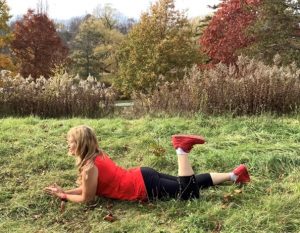
Lying Hip Flexor
Start by lying on your stomach propped up on your elbows. Next bend
one leg and imagine you are squeezing a tennis ball behind your knee.
Next place more weight on the front of the hip on the side that the leg is
bent. Now think about lengthening the knee away from your shoulder
lengthening the front of the hips. You can enhance this stretch by
placing a pillow under the bent knee.
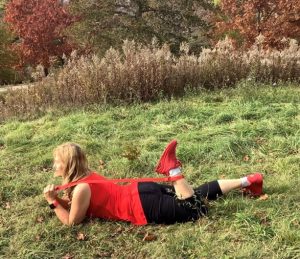
Sartorius Stretch
You may be able to reach back and hold your ankle. If not a stretch
band, strap belt, or yes, even a dog leash can help. Place a strap around
the foot or ankle. Body positioning is the same as the hip flexor stretch
above, with the enhancement of a gentle pull on the strap to lengthen
tight quad muscles. Hold for 30 second and repeat 2x time.
Wide Knee Sway
Start this exercise lying on your back with knees bent and feet wide. Let
the knees fall to one side trying to let the top leg release towards the
floor. Hold for 30 seconds each side.
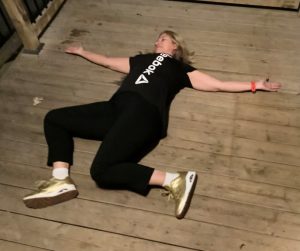
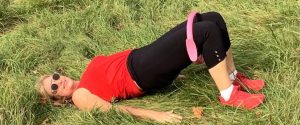
Hip Bridge: Start by placing a belt or Pilates ring above the knee so
knees are hip width apart. Engage the abdominal muscles, squeeze the
buttocks and press against the belt as you lift your hips. Hold for a
count of five. Repeat 5-15x day