
Are you tired of the nipping pain between your shoulder blades or the burning
sensation in your upper back at the end of a long day? When we think of back
pain, we tend to think of our lower back like we talked about in last week’s article.
Low back pain is the most common back pain, but not far behind, is upper back
strain. Upper back strain and pain tends to be less debilitating, but it is
something almost everyone will experience during their life. The stretches below
have been invaluable for me.
Poor posture while sitting at a computer or standing for an extended length of
time is one of the most common causes of upper back strain. When we bend
forward without keeping our shoulders wide, our upper back curves and our
shoulders slide apart placing excessive pressure on the upper back. Over time this
abnormal positioning can lead to overstretching of the muscles and ligaments of
the upper back and neck, further contributing to pain.
To prevent this rounded posture try placing your computer, or perhaps a book or
newspaper you are reading in a position that aligns the top of the article just
below eye level. When reading a book, you may have to prop your elbows up with
a pillow. Pillows can be your friend when minding posture. At the computer, an
adjustable chair may help. The height we work at is important. Placing your
chair too high may contribute to slouching and upper back pain. On the other
hand, sitting with the chair too low can cause neck strain by forcing you to look
up all day. It may not seem like a big deal at first but over time you will
experience cumulative trauma in your neck and shoulder like when you paint the
ceiling. Play with your chair height until you are comfortable. Also, try to
position your body so you are about a foot and a half away from the project you
are working on. This will allow you to keep your elbows at your side when you
work and to minimize reaching and bending. Whether sitting or standing, it is
important that your shoulders, sternum, hips, and navel are all facing the
direction you are working. This will prevent you from awkwardly twisting your
spine. Large spinal muscles are easily strained with twisting motions.
Remember to work with your chin up. Think about balancing an invisible plate
on your head while you work. We put approximately sixty pounds of pressure on
our upper spine every time we look down to read a book, iPad or phone,
according to recent research from New York Spine Surgery and Rehabilitation
Medicine. It is like having a small-medium sized child hanging onto your neck all
day long. Yikes! Good posture is important not only when reading but in all
aspects of life. The less you tilt your head down, the less strain you’ll put on the
muscles and connective tissues in your neck, shoulders, and upper back.
Another technique for reducing upper back pain is to minimize stress. Stress
causes your muscles to tense up, especially those in your upper back and neck. All
that extra tension disrupts blood flow to your upper back and neck muscles
causing localized muscle pain. Many people notice their upper back pain
disappears on the weekend or while on vacation when stress levels are lower.
Regular exercise is also important and can help improve and maintain proper
strength and flexibility of the upper back. Below are three easy exercises for your
thoracic region that can be performed any time during the day. The upper back
occurs in the thoracic region of your spine. This part of your spine connects to
your ribs and this is the area we are targeting in the following exercises.
Seated Row: The rowing exercise is very important to improve posture and
realign the spine. Rowing strengthens your lats and trapezius muscles which help
your upper back to work its best. Start by squeezing your elbows back like you
are trying to touch them together behind your back. Hold for five to 10 seconds
and repeat two to three times per day.

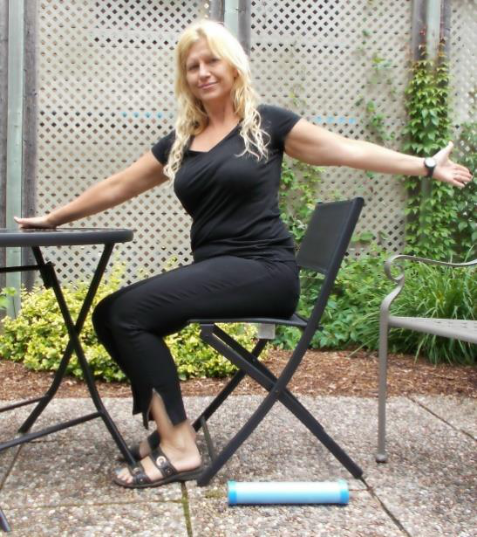
Spinal Rotation: This simple exercise helps remove tension from your upper
back and neck by gently twisting your thoracic spine. To perform this exercise,
hold on to a table with one hand. Make certain the hips face the table as you
extend the other arm straight out in front of the body. Next, inhale and open the
arm towards the back of the chair. With each exhale try to open the chest and
shoulder just a little more. Hold for about thirty seconds and repeat on the other
side.

Back Bend: A back bend can help relieve tension in the upper spine.
Incorporate this stretch into your daily routine to help reduce tension and
improve posture. Start seated with hands clasped behind your head. Widen your
elbows and inhale as you gently arch your upper back over the chair. To avoid
neck strain be sure to keep your head supported and your gaze down. Think of
lifting your chest or sternum toward the ceiling. Deep breathing while stretching
will help to keep your blood pressure down.

The key to success is to take a couple of minutes a few times per day to include
these simple stretches into your daily routine.