
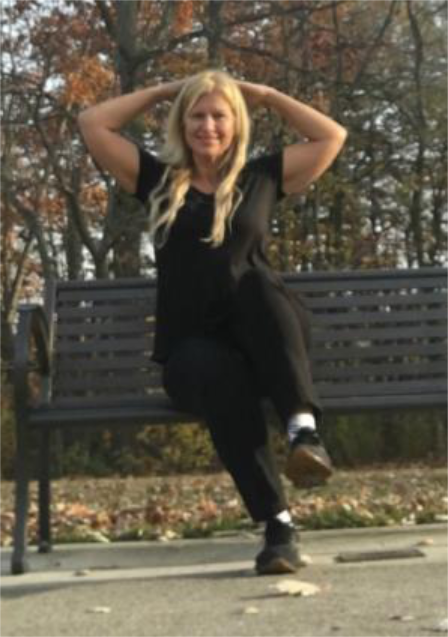
When we think about walking, most people think of the lower body. This week I
want to focus on how we move our upper body when we take a stroll.
Movement starts when we are babies. One of our first methods of moving is
crawling. When we crawl, we learn to coordinate and synchronize our opposite
leg and arm. This is known as contralateral movement. The shoulder girdle and
opposite hip girdle work together to create forward momentum. As soon as we
start to crawl, this cross-lateral pattern of movement helps connect the right and
left hemispheres of the brain. In some people, however, the development of
contralateral movement patterns was interrupted by apparatuses such as the
“baby walker”. But if we didn’t spend time crawling at an early age, we may have
never had the opportunity to fully develop this cross-body pattern. Sometimes
later in life traumatic injuries, bracing, prolonged inactivity, lumbar fusion, and
walking aids can jumble nerve impulses, causing the brain to revert to a
previously mapped same arm, same leg pattern. Try to notice when you walk if it
is natural to swing your opposite arm and leg. If not, practicing cross body
exercises should help.
Why does it matter if we’ve developed contralateral movement? The problem
with walking with the same arm and leg is that it doesn’t allow us to take
advantage of spinal energy. In the 80’s, Serge Gracovetsky noticed that
amputees without arms and legs could still walk and ambulate forward. This is
when he reasoned that spinal rotation may be the root of human locomotion
which he called “The Spinal Engine Theory.” When I was a child, I had a boat that
I played with in the bathtub. The propeller of the boat was hooked to a rubber
band. When I wound up the elastic the propeller would spin and allow my boat
to move forward. That is the best way I can describe the spinal engine theory.
When we move our right leg and left shoulder forward to walk it winds up our
spine much like the rubber band on the propeller and generates energy to move
forward. The lumbar rotation effectively stores elastic energy in the spinal
ligaments.
Therefore, I feel it is very important to pay attention to our upper body when we
walk. Part of my job as a post-rehab specialist is to notice how people move.
What I’ve noticed over the years is that many older adults have a stiff upper body
when they walk. I often see arms hang like a robot barely moving at all and
without involving the shoulders. Another pattern I’ve noticed is that the arms
swing across the body right to left instead of front to back. This deviation of the
arms causes a lot of torque in the spine. Arm movement without shoulder
movement robs us of that extra energy that the spine can generate. The
biomechanical effect of inadequate arm swing is poor spinal mobility, poor hip
mobility and degenerative disc disease.
Arm Swing Exercise: Stand and let your arms relax at your sides. Next
alternate arm swings front and back like you are walking. Be certain the arms are
in a straight line beside your body avoiding bending or swinging in front of the
body. Do this 20-30 times placing more energy on the swing back. Get used to
placing a bit more energy in the back swing with a very relaxed swing forward.
Upper Body Rotation 1: Start by placing your feet about hip width apart and
about 10-12 inches from a wall. Next place your hands on your shoulders and
widen the shoulders. Alternate rotating the upper body from left to right, gently
tapping your elbows on the wall behind you. Rpt 10x

Staggered Stance Rotation 2: For this exercise hold a broom stick across your
chest. Still standing about a foot from the wall, place the right foot forward like
you are about to take a step. Try tapping the right side of the broomstick into the
wall behind you. RPT 20x
Repeat the same exercise leading with the left foot and tapping the broomstick
behind you on the left.

Hip Bumps: Hip bumps are a great way to integrate the upper and lower body.
Start with your hands placed on the top of your head. Put some energy into your
hands with your head trying to create length and good posture. Keep your head
as still as possible while you lift one side of your hip off the chair and then the
other. RPT 20x

Posture is very important for walking. Try to avoid carrying a heavy purse or
talking on the phone when walking and try not to watch your feet. As soon as you
drop your head forward or hold an object on one side, it throws off the alignment
of your head with your shoulders and hips. When we are carrying a load or are
distracted while walking, the probability of tripping and falling increases. This
month is falls prevention month and we want to be certain that the only thing
that falls back this year is your clock!